Infrastructure as Code (IaC) Explained for Beginners
Cloud computing has changed how organizations build and manage infrastructure. Instead of manually creating servers, storage, and networking resources through dashboards, companies increasingly use Infrastructure as Code (IaC) to automate cloud environments. For students interested in cloud computing, DevOps, or platform engineering, understanding IaC is becoming an essential skill.
Infrastructure as Code allows teams to define infrastructure using configuration files or code. This approach improves consistency, speeds up deployments, and reduces human error. As businesses continue moving to AWS, Microsoft Azure, and Google Cloud, IaC has become a core part of modern cloud operations.
What Is Infrastructure as Code?
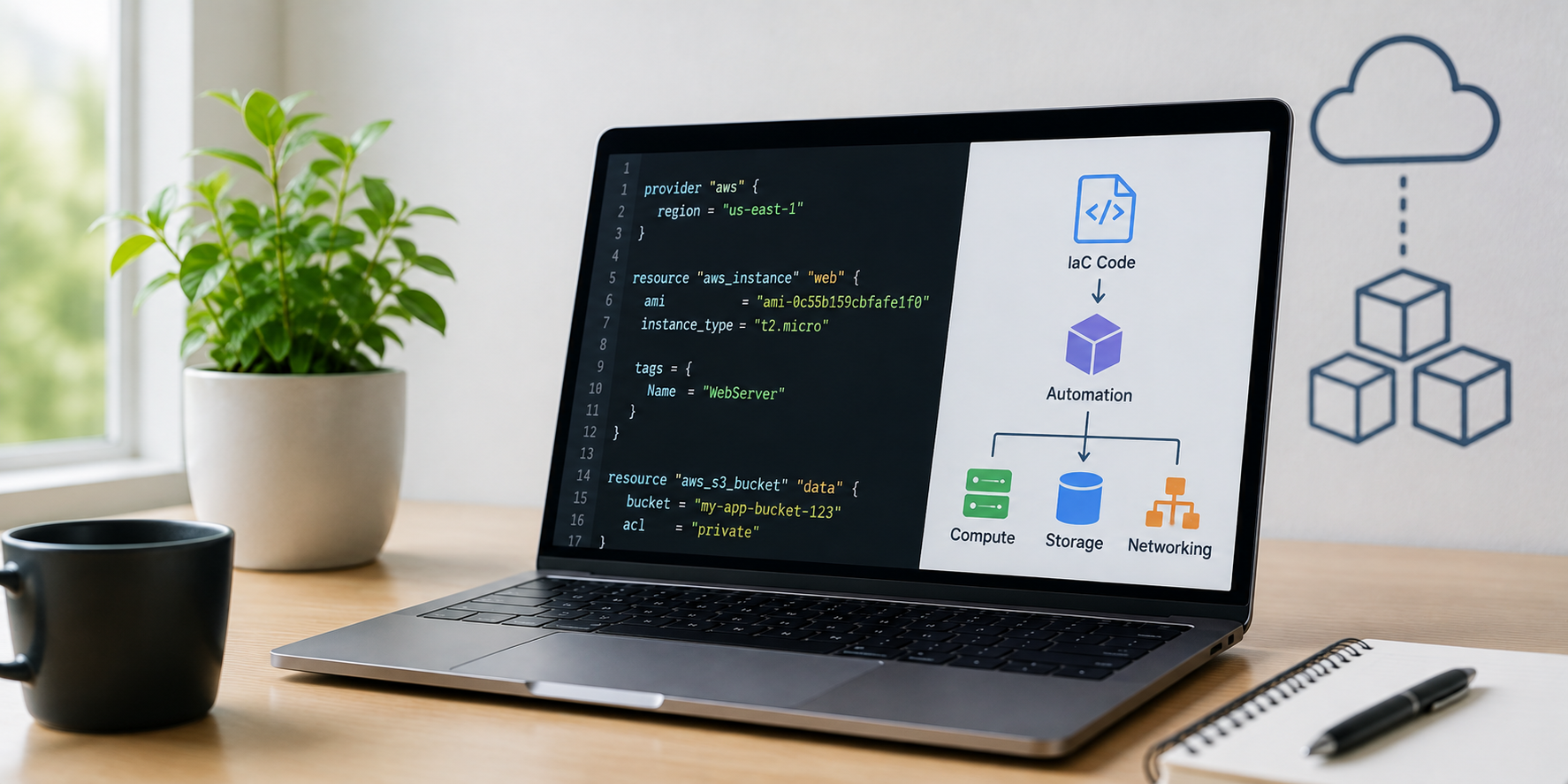
Infrastructure as Code is the practice of provisioning and managing infrastructure through machine-readable configuration files rather than manual setup. With IaC, teams can define servers, databases, virtual networks, storage, and security rules in code and deploy them repeatedly in a predictable way.
For example, instead of manually creating a cloud server through a cloud console every time, an engineer can write a configuration file that automatically creates the same infrastructure whenever needed.
Why IaC Matters
Manual infrastructure management can become slow and error-prone, especially when organizations need to create the same environment multiple times. IaC solves this problem by introducing automation and repeatability.
- Ensures consistent infrastructure across environments
- Reduces manual configuration errors
- Speeds up deployment and setup processes
- Supports DevOps and CI/CD workflows
- Improves scalability and operational efficiency
How Infrastructure as Code Works
IaC tools use configuration files that describe the desired infrastructure state. Once the file is executed, the tool provisions the required resources automatically.
For example, a file may define:
- A virtual machine or cloud server
- A storage bucket
- A database instance
- A virtual network
- Firewall or security group rules
The IaC tool reads the file and creates these resources in the cloud platform.
Popular IaC Tools Students Should Know
1. Terraform
Terraform is one of the most popular Infrastructure as Code tools. It supports multiple cloud providers and allows users to define infrastructure using declarative configuration files.
2. AWS CloudFormation
CloudFormation is Amazon Web Services’ native IaC service for managing AWS infrastructure.
3. Azure Resource Manager (ARM) Templates / Bicep
Microsoft Azure provides ARM templates and Bicep for defining and deploying Azure resources.
4. Ansible
Ansible is often used for configuration management and automation. It is also useful in infrastructure provisioning workflows.
Benefits of Learning IaC as a Student
Infrastructure as Code is valuable because it connects cloud computing with automation. Students who understand IaC become better prepared for roles in cloud engineering, DevOps, SRE, and platform operations.
- Builds automation skills
- Strengthens cloud knowledge
- Supports modern DevOps practices
- Improves infrastructure management understanding
- Increases employability in cloud-related roles
Skills Students Should Learn Alongside IaC
To use Infrastructure as Code effectively, students should also build knowledge in related technical areas.
- Cloud fundamentals (AWS, Azure, or Google Cloud)
- Linux basics
- Networking concepts
- Version control with Git
- CI/CD fundamentals
- Basic scripting with Python or Bash
Simple Student Project Ideas Using IaC
Students can strengthen their cloud portfolios by building beginner-friendly IaC projects such as:
- Deploying a virtual machine using Terraform
- Creating a cloud storage bucket and access rules
- Provisioning a test web application environment
- Setting up a cloud network with subnets and security groups
- Automating infrastructure for a student project website
Career Opportunities Related to IaC
Infrastructure as Code is relevant in multiple career paths, especially in cloud and operations roles.
- Cloud Engineer
- DevOps Engineer
- Platform Engineer
- Site Reliability Engineer
- Infrastructure Engineer
How to Start Learning IaC
Students can begin by learning one cloud platform and then exploring Terraform or the native infrastructure tools of that platform. A good approach is to start with small projects, understand basic syntax, and practice deploying test environments.
Students should also document their work on GitHub. A simple infrastructure project with proper documentation can become a strong portfolio item for internships and entry-level cloud roles.
Conclusion
Infrastructure as Code is a powerful skill that helps organizations manage cloud resources efficiently and reliably. For students, learning IaC provides hands-on experience with automation, cloud platforms, and modern DevOps workflows. As companies continue to invest in scalable and repeatable infrastructure, IaC knowledge will remain highly valuable for future cloud and DevOps careers.